
Germany

EuRoB-Karte Prenzlau
 

Prenzlau

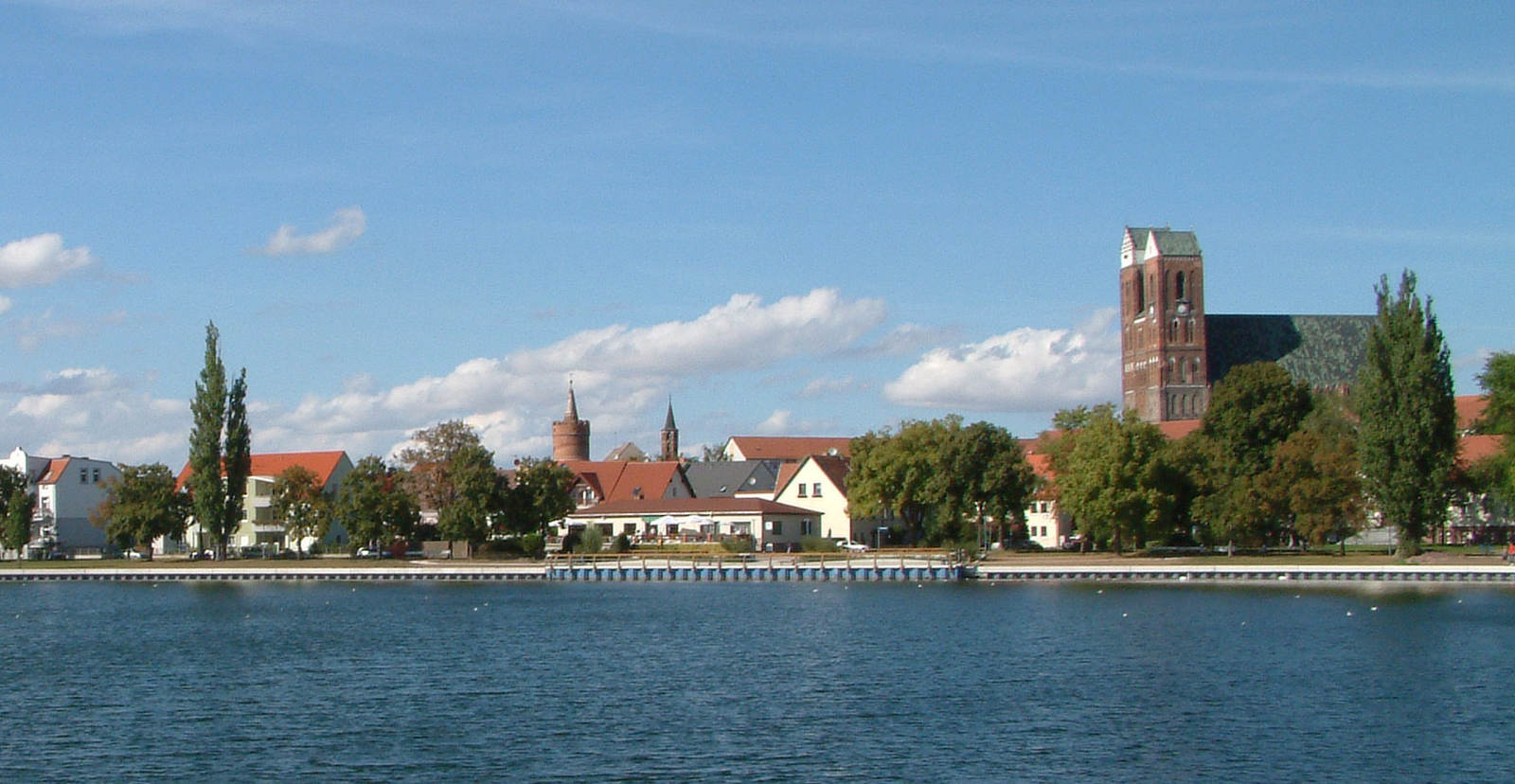
Panorama, Prenzlau
Photo: LaGa Prenzlau 2013 Ltd.


Prenzlau – The Green Town on Lake Ucker

 
Prenzlau's most well-known landmarks are perhaps beautiful Lake Ucker – lapping at the feet of imposing St. Mary's Church – and the town's many churches and ecclesiastical sites. Yet for tourists longing for culture and thrilling new experiences, Prenzlau offers so much more: from stunning sights to extensive cultural and leisure facilities, through to a rich range of activities offered by the town's clubs and societies.  
In Prenzlau, if you're after relaxation, it's never difficult to find yourself a comfy corner, sit back and enjoy a concert, or else to while away a cultural midsummer night in the monastery's garden. For those who love sport and a good night's out, there's boat parties on the Ucker Sea or the opportunity to get involved in some of the town's extensive sporting calender.

Adapted from information supplied by Prenzlau, original here.

Contact

 
Prenzlau Visitor Information
Marktberg 11
D-17291 Prenzlau

Tel.: + 49 3984 833952
Fax: +49 3984 833954

E-Mail:
stadtinfo@prenzlau.de

Internet:
www.prenzlau-tourismus.de
 

Highlights

 
St.-Marien-Kirche Prenzlau
Photo: LaGa Prenzlau 2013 Ltd.
 
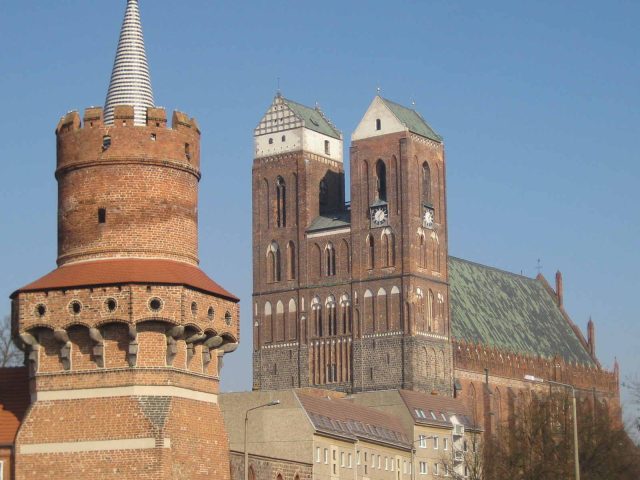
Visitors entering Prenzlau for the first time will be greeted by the towering spires of St. Mary's, which can be seen from almost anywhere in town. The town landmark is one of the most significant Brick Gothic heritage sites around. The view from the church spires (above all, from the middle tower!) offer a 360 degree view of the town.


Experience the World of Brick Gothic

 
St. Mary's Church is the town emblem. The three-aisled hall church is one of the most significant Brick Gothic heritage sites of the 13. and 14th centuries. Having burnt down in the final days of the Second World War in 1945, the church was later rebuilt, starting in 1970. Today, visitors can check out the church, and even climb its spires in the summer months. In December, the town's Christmas market is held in the church.

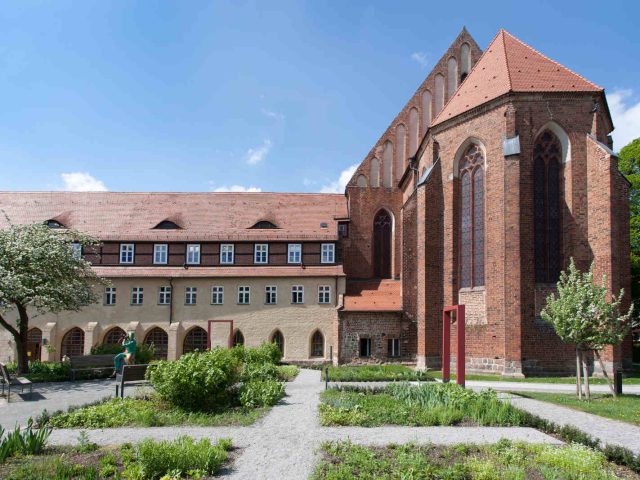
The Dominican Monastery at Prenzlau is amongst the best preserved in northern Germany and has been praised for its outstanding architecture. The painstakingly restored cloisters, the refactory with its colourful frescos and the lay refactory with its mit its embellished, lacy columns and its unique light shafts render the monastery a fine example of monastic architecture. Ever-changing exhibitions and gallery offerings as well as concerts, theatre and dance performances held as part of the "Summer of Culture in the Monastery Garten," or else two penny performances of the "Prussian Chamber Orchestra" have helped the Dominican Monastry become one of the region's cultural hotspots.   

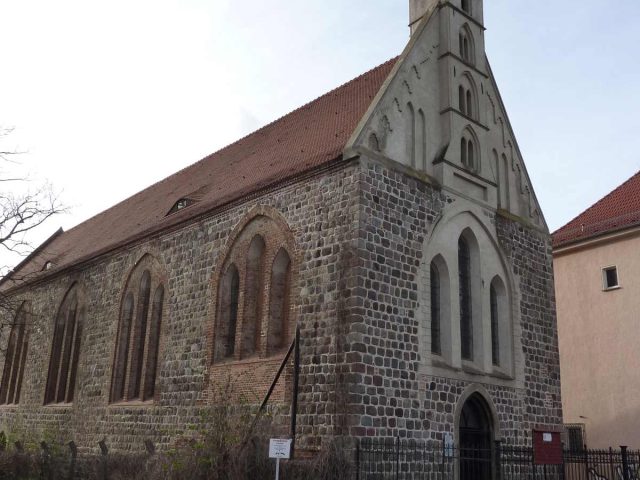
The Franciscan monastic church was around 1235 and 1250 and was designed to resemble the church where St. Francis of Assisi 1235 und 1250 found his resting place. After the monastery was disbanded in 1544, the monastery was converted into a knight's fiefdom. Following the renovation of the site in 1598, the Evangelical Lutheran parish began using the church; in 1846, King Friedrich Wilhelm IV donated the church to the Prenzlau parish, with the interior being renovated between 1848-65, the space undergoing substantial renovation at this time. Sadly, the church was largely abandoned in the 1970s and '80s, with the eastern part of the truss supporting the roof collapsing in 1991. Two years later, renovation and structural repair work on the church began, with the first concert in the restored space held in 1995.

St. George's Chapel was built using brick set upon a granite base ca. 1300, the building originally featuring a western gable and a small clocktower. The church was situated outside the city walls by the road leading to nearby Schwedt, and served as the site of worship for the adjoining St. George's Hospital as well as an inn housing pilgrims and traders travelling through the region. The chapel was then used as a private dwelling until 1990, today housing an architectural practice.

Texts adapted by information suppled by Prenzlau, original available here.

Guided Tours

 
Why is there a flying raven perched on the top of the central gate, and what's the bird got to do with the amputated hangs of two mayors now on show at the museum? Why are there so many churches in Prenzlau, and why do most of the inner city's buildings date to the time between the 1950s and '80s?

These are amongst some of the questions you'll learn the answers to from our friendly town tourguides, who lead tours ever Saturday between May and September (and on Easter Saturday). .

The tours leave from the market side of St. Mary's Church at 11:00 A.M.

www.prenzlau-tourismus.de/prenzlau_urlaub.html

Beyond Brick Gothic

 
State Horticultural Festival (Landesgartenschau) 2013

Having taken up the challenge of showing off its green thumb, Prenzlau is to host the 2013 Brandenburg State Horticultural Festival, an event that's sure to turn visitors "Green with Bliss" (the town's official motto). Thanks to its attractive setting in the heart of the Uckermark lakes district in northern Brandenburg, the town (located on the banks of the lower Ucker Sea) is in the perfect position to host a garden show, thanks to the results of an extensive restoration programme undertaken over the past few years, which means the county capital's the perfect backdrop for the State Horticultural Festival.

More information is available here

Lake Ucker

The countryside around Prenzlau boasts many waterways and thus offers multiple opportunities for those seeking a relaxing day out on the water or aquatic sporting activities. Alongside the keen swimmers, canoists and surfers who've always passed by, cyclists have recently discovered the region around Prenzlau. Active tourists can bring their bikes or hire them out onsite and then head off on unforgettable independent rides through the lakes district, or join up with a bike tour group, experiencing the sites of the region in good company. 

Passenger Ship "Uncle Albert"

Shipowner Torsten Kohn and his team have offered excursions on Lake Ucker since February 2002. An ever increasing number of cyclists feature amongst those travelling with Uncle Albert: the adventurers generally board the ship in Prenzlau, experience the sights and sounds of a memorable passage along the town canal, and then disembark in Warnitz, heading off again on two wheels. During the voyage, the ship's crew impart entertaining facts and figures about the region's geography, history and culture. 

Further information is available here


Brick Gothic Buildings

 
St.-Marien-Kirche Prenzlau
Photo: LaGa Prenzlau 2013 Ltd.
 
Dominikanerkloster, Prenzlau
Photo: LaGa Prenzlau 2013 Ltd.
 
Blindower Torturm, Prenzlau
 
Photo: LaGa Prenzlau 2013 Ltd.